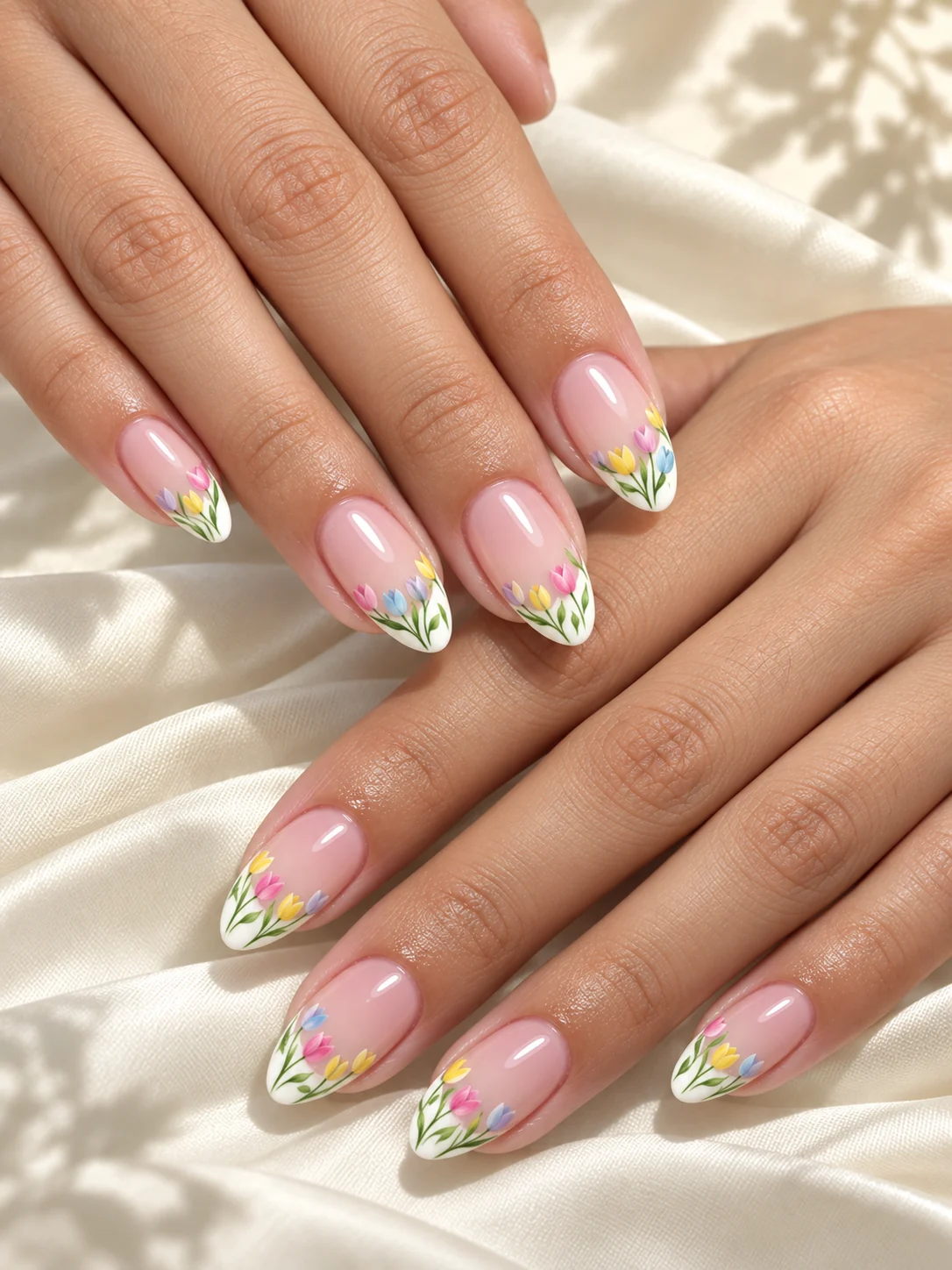
Accent nails and full-set nail art create different balances. An accent approach gives a few nails the main decorative role, while a full-set concept carries a design across all the nails. The choice is about the amount of detail and the overall effect, not a rule that one is always simpler or cheaper.
Decide where the eye should go
| Approach | Design idea | Clarify with the technician |
|---|---|---|
| One accent | One focal motif with quieter surrounding nails | Which nail and how large the detail should be |
| Paired accents | Repeated or related details | Whether the two hands should match exactly |
| Full-set pattern | A consistent theme across the nails | Which elements repeat and which vary |
| Mixed full set | Several coordinated designs | A clear layout for each nail |
Complexity matters as well as quantity
One detailed sculptural accent may involve more work than a simple repeated line on several nails. Do not estimate the total only from the number of decorated fingers. Ask the technician to review the reference and explain the design work involved.
Keep the base service clear
Artwork is separate from the decision about manicure, SNS, acrylic or another system. Establish the length and shape first, then discuss the decorative plan. A design photographed on a long extension may need to be simplified for a shorter natural nail.
The additional-services menu lists nail design from $10+, but that is not a fixed quote for every motif or full set. Confirm the selected service and art together.
Make a small layout plan
Save the main reference and note which nails should carry each detail. If you are combining ideas, explain the shared color or finish that should connect them. The inspiration-photo guide can help keep the request focused.
For a quieter direction, see timeless designs. For seasonal combinations, read holiday party styling. Agree on the design, time and price before work begins, especially when the request includes raised elements or several different patterns.
Plan the design finger by finger
Here are two ways to use the same warm nude and espresso palette. The first gives the ring finger the decorative role. The second distributes simple details across the hand. The table is a styling brief to adapt with the technician, not a fixed service package.
| Finger | One-accent version | Coordinated full-set version |
|---|---|---|
| Thumb | Plain warm nude | Nude with a fine espresso French edge |
| Index | Plain warm nude | Nude with one small espresso dot |
| Middle | Plain warm nude | Nude with a fine espresso curve |
| Ring | Nude with a fine espresso curve | Nude with a fine espresso French edge |
| Little finger | Plain warm nude | Nude with one small espresso dot |
Now specify the second hand. Repeating the ring-finger accent on both hands means two decorated nails across the appointment. If you want only one decorated nail in total, say which hand and finger. This small distinction makes a reference and a quote easier to understand.
You can also repeat the palette without mirroring the layout. For example, move the curve to the index finger on the other hand while retaining the same line weight and base color. Describe that choice before the artwork begins.
When adapting to less space, simplify the detail using the short-nail examples. For a pedicure, repeat one shade from the design rather than every motif; the color-pairing guide offers practical combinations.
Published by Luxury Nail & Spa. Updated .
Menu references checked November 10, 2026. Confirm the selected service and final quote with the salon.