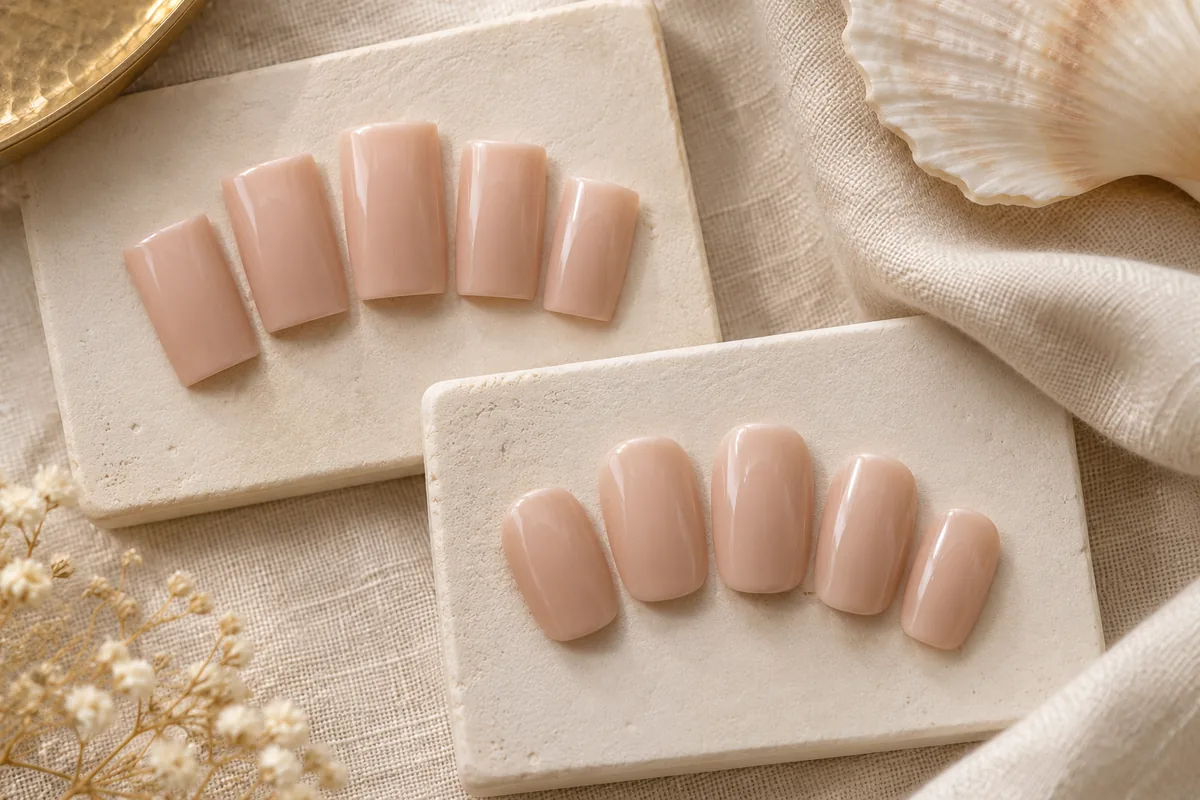
Square and squoval nails both retain a straighter-looking free edge, but squoval softens the corners. The difference can be subtle in a photograph and more noticeable when you look closely at the outline. Neither shape guarantees that a nail will never catch, chip or break.
Decide how defined you want the corners
| Preference | A direction to discuss |
|---|---|
| A crisp outline | A square shape with more visible corners |
| A softer everyday outline | A squoval shape with rounded corners |
| A very short length | How much of the shape can be retained comfortably |
| A French design | The curve and width of the line at the edge |
Use your current nails as the starting point
Explain the length you want to keep and show the technician the actual nails. Softening square corners removes some material; creating a more defined corner from an already rounded shape is a different problem. A reference can communicate the goal, but it does not change the starting structure.
Consider the finish at the same time
A solid color makes the outline easy to see. A narrow French tip can emphasize the straighter edge, while a deeper or more curved line changes that impression. If you want a quieter design, a neutral base with a small amount of detail can keep the shape clear.
See micro French ideas or neutral everyday nails for related styling directions.
Choose for preference and daily use
Think about which lengths and edges have felt comfortable with your routine. There is no need to assign either shape to a particular age, gender or occupation. If your work has nail requirements, use those rules as part of the decision.
For a wider comparison, read choosing a nail shape. If you are changing a set already on your nails, use the shape-change guide and describe the existing product when booking. Confirm whether shaping is part of the selected service or an additional entry on the relevant menu.
Describe the corners before choosing the label
The word squoval can mean different degrees of softness in inspiration photos. A useful brief describes what should stay straight and how much of each corner should curve. Keep the preferred length the same while comparing these directions.
| Your preference | A clear shape brief |
|---|---|
| Crisp square | Keep a straight-looking tip and clearly defined corners. |
| Soft-corner square | Keep the straight center of the tip, with a small curve at each corner. |
| More rounded squoval | Soften the transition more visibly while retaining some straightness across the center. |
Look at the outline before adding a decorative line. A deep, curved French tip can make the design look rounder even when the outside edge is fairly square. A narrow line that follows the edge keeps more attention on the actual silhouette. Point out both the outer shape and the line inside it when using a French reference.
A practical request might be: “Keep this length and the straight center, but make the two corners softer.” That is more precise than asking for a softer nail without saying which part should change. Let the technician assess whether the present shape has enough material for the proposed result.
If you want the whole end to form a continuous rounded curve, compare the oval and almond silhouettes before choosing. For artwork after the outline is settled, the short-nail design examples show ways to leave the shape visible.
Published by Luxury Nail & Spa. Updated .