
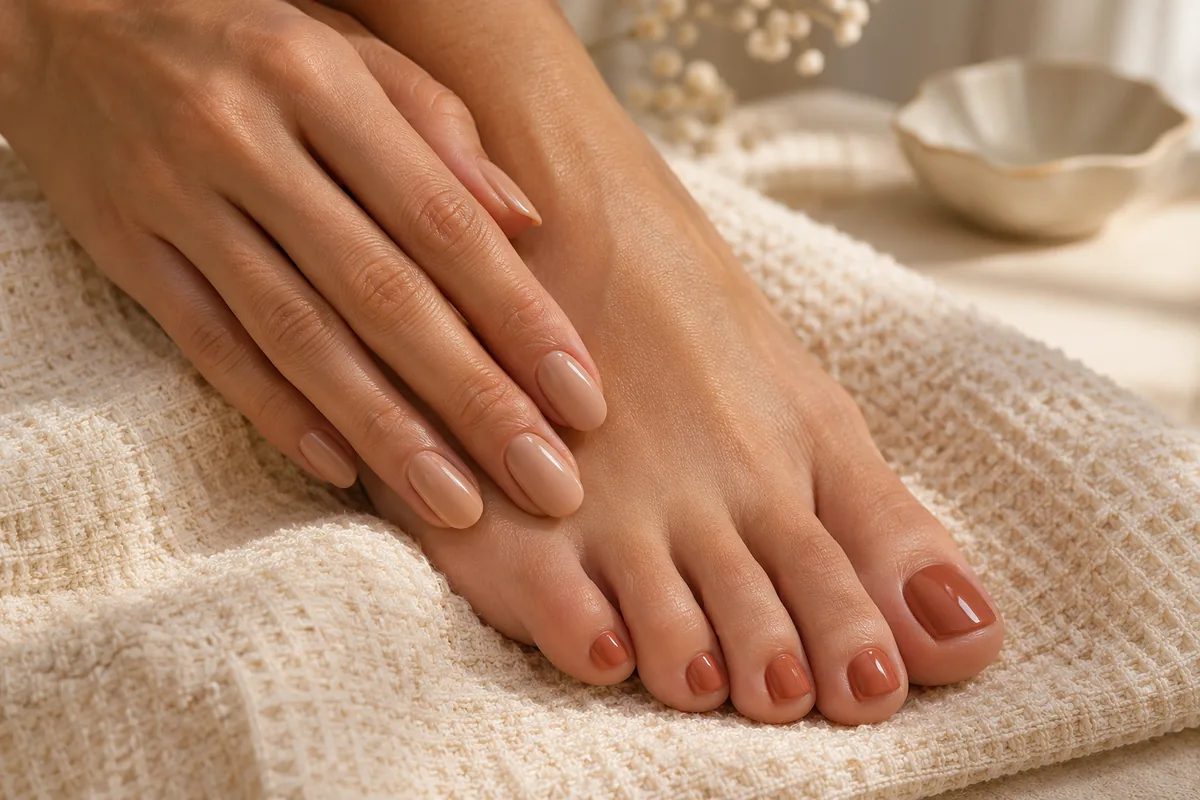
Your manicure and pedicure can look coordinated without using the same color or repeating the same artwork. A shared tone, a related finish or one repeated accent can connect the two. Start with which area you want to be the focal point.
Four ways to coordinate
| Approach | Hands | Feet |
|---|---|---|
| Related tones | A softer version of a color | A deeper shade from the same family |
| Neutral plus color | A quiet neutral | A more visible color accent |
| Shared detail | A French or art detail in one shade | A plain color repeating that shade |
| Related finish | A restrained sheen | A finish with a similar level of shine |
These are styling directions rather than guaranteed shade matches. Compare the actual swatches available for each selected service.
Keep one part simpler
If the manicure has several colors or detailed artwork, a single-color pedicure can repeat one element without competing with it. If you prefer simple hands, a richer toe color may supply the contrast. Decide what should lead instead of trying to make every part equally busy.
Remember that product ranges can differ
The same color name may not look identical across regular polish, gel or another system. Tell the technician if an exact match matters, and ask what the current product choices can achieve. A related shade can be a deliberate solution when an exact pairing is not available.
Book both services clearly
Review the manicure menu, pedicure menu and Pedi+Mani combinations. Specify the desired finish for each area and any existing product that needs removal. Do not assume one art or gel add-on covers both hands and feet.
For a reflective pairing, read chrome on hands and toes. For a seasonal palette, see fall color ideas or summer color directions. Bring a small set of references and explain the shared element you want; that is clearer than asking for two unrelated photos to somehow match.
Five pairings to use as a starting palette
Choose one connection between hands and feet: a related color family, the same accent shade or a shared level of softness. The examples below describe color relationships; select the actual shades from the ranges available for your two services.
| Manicure | Pedicure | What connects them |
|---|---|---|
| Sheer rose pink | Deep burgundy | A red-pink family, with a deliberate difference in depth. |
| Creamy beige | Espresso brown | A neutral palette that moves from light to dark. |
| Soft peach | Warm coral | A warm color direction, with more intensity on the toes. |
| Milky pink with fine white French tips | Plain milky pink | A repeated base color, with detail reserved for the hands. |
| A neutral base with a navy accent | Solid navy | The small accent becomes the main color on the feet. |
To adapt a pairing, change one thing at a time. With beige and espresso, for example, compare a pinker beige with a cooler brown, then a peachier beige with a warmer brown. Looking at both swatches together is more useful than choosing them in separate parts of the appointment.
If you wear patterned sandals, a single-color pedicure can let the pattern remain prominent. With plain sandals, you may prefer more contrast on the toes. Neither choice requires copying artwork onto the smaller nails.
For quieter hands, use the neutral palette examples. For a particular outfit, the outfit coordination guide helps choose which color or accessory to repeat.
Published by Luxury Nail & Spa. Updated .