
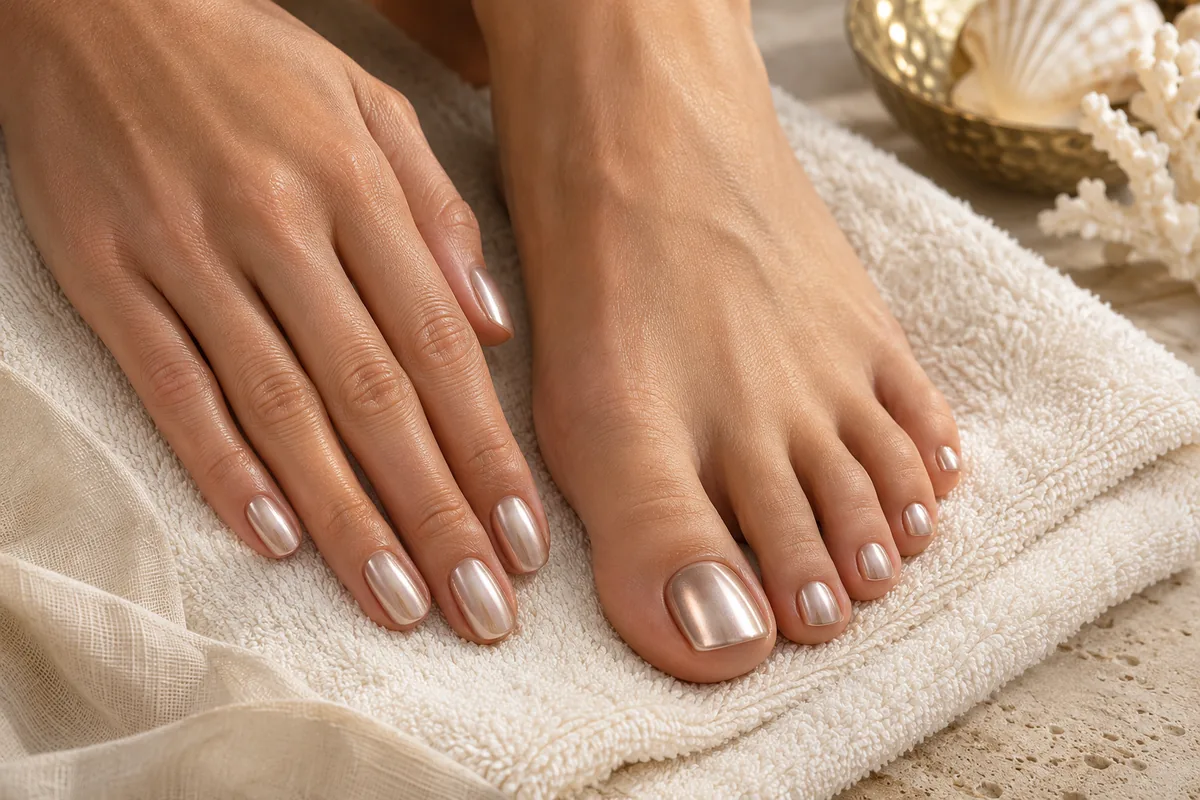
Chrome on hands and toes can create a coordinated reflective look, but the two areas do not need identical artwork. Start by deciding whether the manicure should lead and the pedicure should echo it, or whether you want a similarly reflective finish on both.
Choose a shared element
| Approach | Hands | Feet |
|---|---|---|
| Same color family | A reflective finish over a chosen base | A related base with a simpler treatment |
| One focal area | Chrome accents with some plain nails | One quiet solid color |
| Similar sheen | A restrained reflective detail | A similarly subtle finish |
| Stronger contrast | A darker reflective manicure | A lighter related pedicure |
These are styling ideas to discuss, not a statement that every product or effect can be applied identically in every service. Confirm the current options with the technician.
Look at the base color as well as the shine
The reference's reflection can draw attention away from its underlying color. Ask whether you like the finish, the base or the combination. A different base can change the impression even when the reflective effect looks similar.
Keep the pedicure proportions practical
Small toe surfaces may call for a simpler layout than a hand reference with detailed lines or several accents. If the goal is coordination, repeating one color or finish can be enough. It is not necessary to reproduce every part of the manicure.
Confirm two complete service choices
Review the relevant hand service and the pedicure menu. The menu lists chrome among its add-ons, but a finish entry is not the complete price of both services. Explain any existing product, preferred package and design details, then ask for the total.
See chrome versus cat-eye if the reflective effect is still undecided, and Pedi+Mani combinations if you want a paired appointment. Use references to communicate the look, and let the salon confirm the products and work needed for the actual request.